Supported banks
StatementTable reads the printed table rather than a bank-specific template, so a statement does not have to be on a list to convert. Every conversion is balance-checked whatever the bank, and three pages a day are free, so your own statement answers the question faster than any list can.
Last updated September 10, 2026
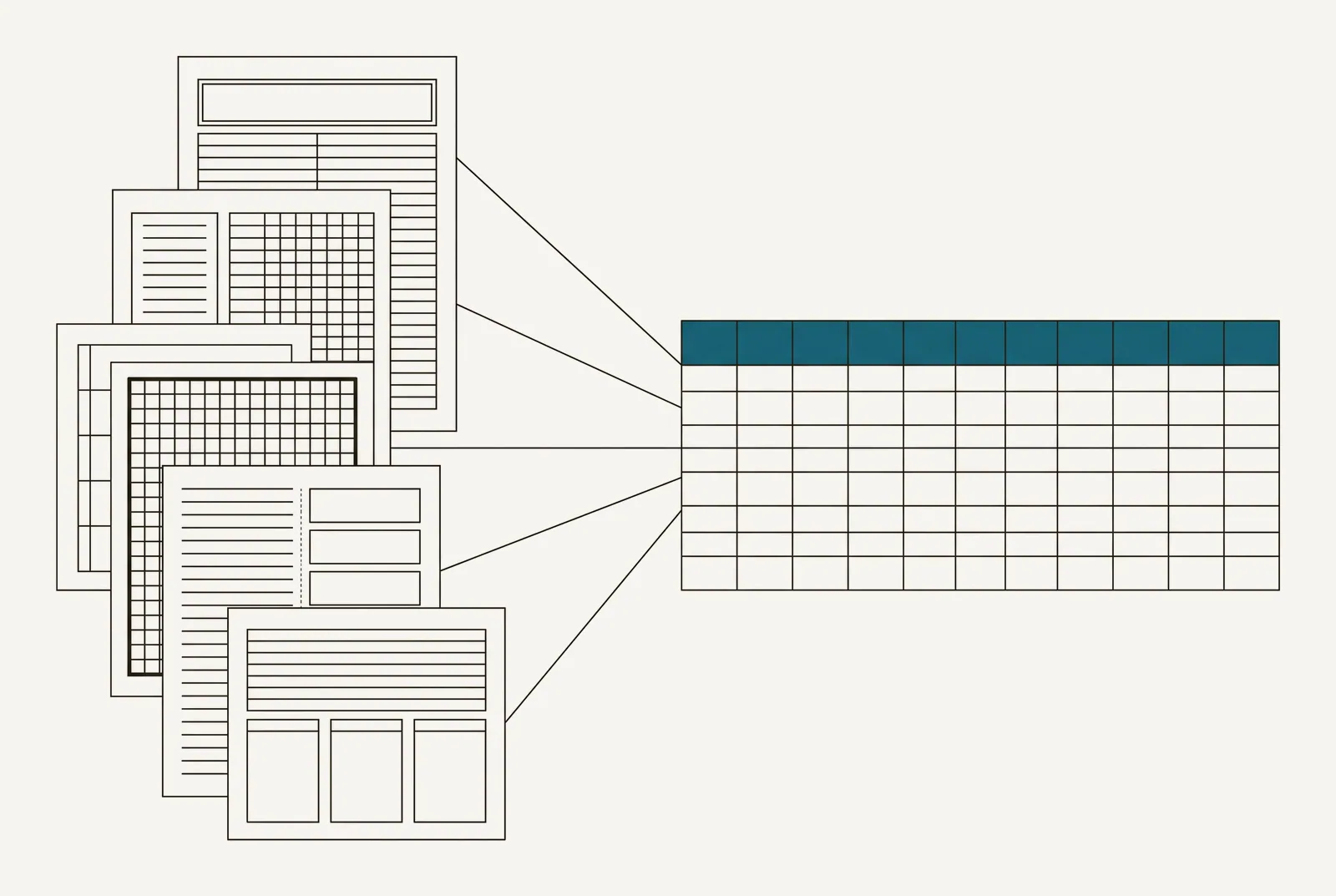
Statement layouts this reader handles
These are the structures the extraction and the balance check are built and validated around. Most statements in the markets we serve are one of them or a close variant.
| Layout family | Columns | Dates and numbers | Balance check |
|---|---|---|---|
| Australian and New Zealand transaction account | Debit / Credit / Balance, or Withdrawals / Deposits / Balance | DD/MM/YYYY, 1,234.56, CR and DR suffixes | Line by line |
| UK current account | Money out / Money in / Balance, overdraft (negative) balances | DD/MM/YYYY or DD Mon YYYY, 1,234.56 | Line by line |
| Canadian chequing account | Withdrawals / Deposits / Balance | DD/MM/YYYY or MM/DD/YYYY, detected from the statement | Line by line |
| US checking account | Withdrawals / Deposits / Balance | MM/DD/YYYY, 1,234.56 | Line by line |
| Single-column signed amount | One Amount column, debits negative | Either date order, detected from the statement | Line by line |
| Newest-first statements | Any of the above, printed in reverse date order | Detected and re-sorted before the check runs | Line by line |
| Credit-card statement | Previous balance, transactions, new balance | Sign convention flipped, subtotals excluded | Closing total |
Every release is validated against a fixed corpus of statements with known-correct output in these layouts, in native, scanned and photographed form. Method and scope are on how we test.
What a bank count actually measures
Converters in this category advertise one: a thousand banks, five thousand banks. A number like that describes a library of templates, and a template covers your statement until the bank changes its layout, at which point the count is still on the website and your conversion is wrong.
This reader has no templates. It reads the printed table the way a person does, which is why a credit union or building society statement with an unusual layout is read the same way as any other. Then it proves the result: the running balance is rebuilt from the extracted rows and compared, to the cent, with the figure your bank printed. Run one statement free and the badge settles it for your bank specifically, which is more than any list on any website can tell you.
Dates and numbers
The ambiguity that matters is 03/04/2026: 3 April or March 4? The order is resolved from the statement rather than assumed. Any day number above 12 in a column settles it for the whole document; the statement period printed in the header sets the expected range; and the date sequence has to run in one direction. Where a running balance is printed, the check catches an ordering error that gets past all three.
| Format | Example | Typical origin |
|---|---|---|
| DD/MM/YYYY | 04/03/2026 | Australia, New Zealand, UK, Ireland, Canada |
| DD Mon YYYY | 04 Mar 2026 | Australia, UK |
| MM/DD/YYYY | 03/04/2026 | US, some Canadian banks |
| YYYY-MM-DD | 2026-03-04 | ISO, some business statements |
Both number conventions, 1,234.56 and 1.234,56, are detected per statement. Accounting-style negatives in parentheses, a trailing minus, and CR and DR suffixes are all read as the sign they mean. Every export writes dates in ISO order (YYYY-MM-DD) or as a real date value in XLSX, so a DD/MM statement never turns into MM/DD in your spreadsheet.
Document types that work
- Transaction, current, checking and savings account statements
- Credit-card statements, with the sign convention flipped and subtotals excluded. Most issuers print totals rather than a per-line balance, so the check reconciles those. Details
- Business account statements
- Statements printed newest-first, detected and re-sorted automatically
- Statements in any currency; the currency printed on the statement is detected and carried into the export
Documents this reader is not built for: banking-app screenshots, transaction lists pasted into a document, general ledgers and handwritten cash books. None of them prints the arithmetic the check runs on, so the part of the product that matters most has nothing to work with.
What separates a scan that converts cleanly from one that comes back flagged is in converting a scanned bank statement.
How a layout gets added
A layout joins the table above once statements in that shape convert with a passing balance check and a manual spot check of the extracted rows against the page. That work happens on our side, on documents we hold. We never ask you to send us a statement: the column headers and whether a running balance is printed tell us everything we need.
Ask us to verify your bank
Tell us the bank, country and account type. There is no need to send the statement. A description of the columns is enough: what the column headers say and whether a running balance is printed. Verification takes about a week, and you get an email when it is done.
Questions
My bank isn't listed. Will it work?
The reader works from the printed table rather than a per-bank template, and the balance check runs on every statement. Convert one page on the free tier: a reconciled result is the answer for your bank, your layout and your document.
What does "verified" mean here?
A layout earns its place on the list once statements of that shape convert with a passing balance check and a manual spot check of the rows. The list describes structures rather than brands, because the extractor reads the printed table instead of matching a bank-specific template. A bank that is not on the list costs one free page to try.
How do I get my bank verified?
Use the form on the banks page or email us the bank name, country and account type. There is no need to send the statement: what the column headers say and whether a running balance is printed is enough. Verification takes about a week, and you get an email when it is done.
Convert one and see
Three pages a day are free, and you don't need an account to run your own statement through it.