Self-employed tax prep
Twelve statements, one spreadsheet, totals that add up. Without retyping a year of your life.
Last updated September 10, 2026
The annual problem
Once a year you need every business transaction from every account, in one place, sorted and totaled, so you or your accountant can work out income and expenses. The form at the end differs by country, a Self Assessment return in the UK, a BAS and an income tax return in Australia, a Schedule C in the United States, and the job before the form is the same everywhere: a year of transactions, complete, out of the PDFs and into a spreadsheet.
Your bank's CSV export stops at 90 days or a year, the card issuer's export is a different shape, and the older months are PDFs in your email. The usual answer is a weekend and a lot of typing. The typing isn't the worst part; the worst part is not knowing whether you dropped a row.
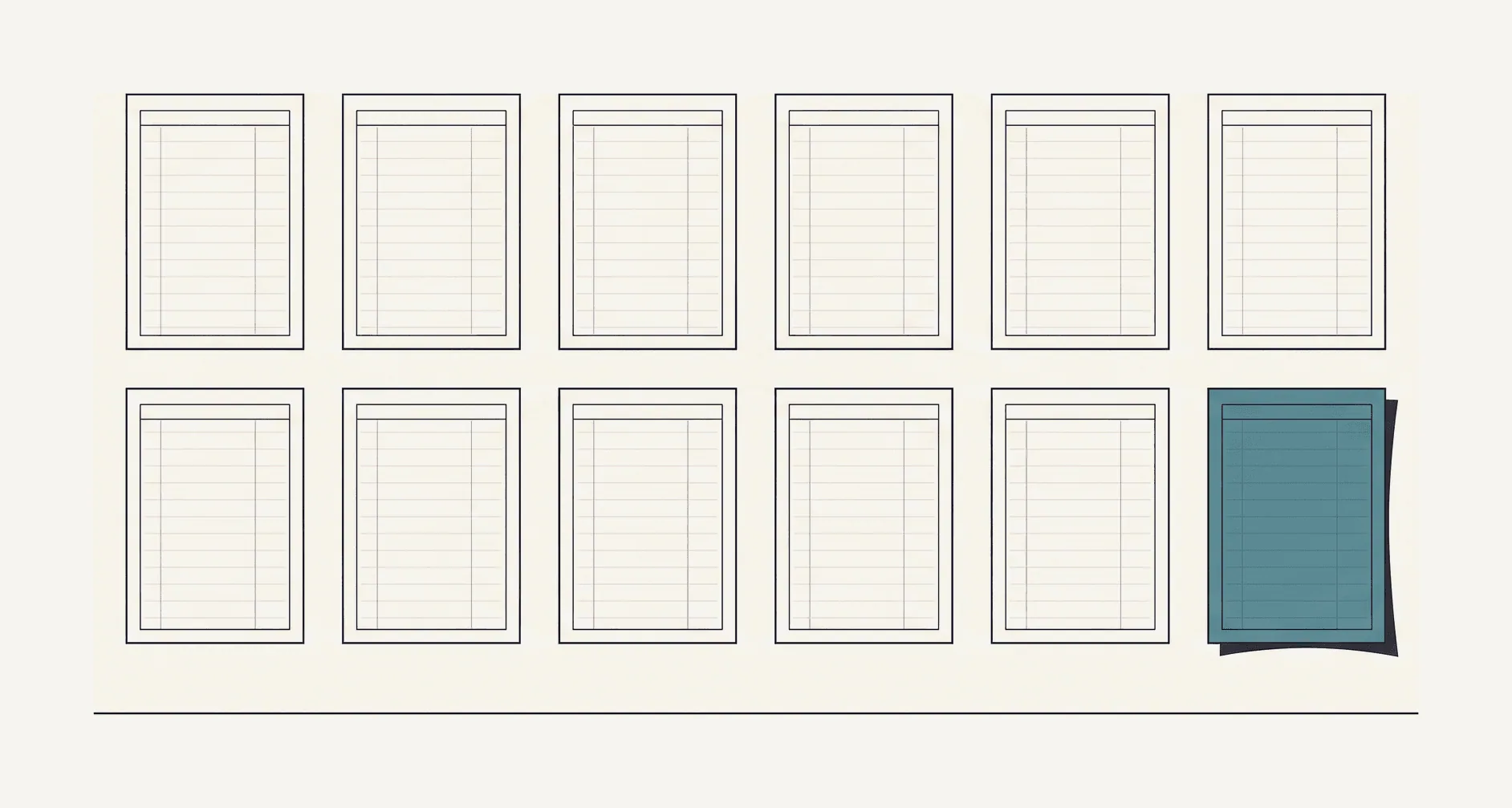
The workflow
- Download the PDF statements for the year from each account: bank and credit card. For a UK tax year that is April to April; for an Australian one, July to June; for a US one, the calendar year.
- Convert them one by one. Native PDFs take 10-60 seconds each. A year of monthly statements for one account is usually 25-50 pages.
- Read the badges. A bank statement reconciles line by line. A card statement from an issuer that prints totals rather than a running balance, which is most of them, comes back "closing total checked", and the totals still have to tie. Why.
- Download XLSX for each and paste them into one workbook, or download CSV and import into whatever you use.
- Sort, filter, total. Dates are real dates and amounts are real numbers, so a pivot table or a SUMIF works immediately. The totals you carry to the return, or hand to your accountant, come from a column that was checked against the bank's own arithmetic.
A longer version of the same sequence, written for a full year of catching up, is in year-end bookkeeping from bank statements.
What it costs
Three pages a day are free without an account, so a single statement a month costs nothing. For a whole year in one sitting, two accounts at 25-50 pages each is 50-100 pages: a $9 Starter pack covers 60 and a $29 Pro pack covers 300, and whatever you don't use stays on your account for next year. Pricing.
Before you file
- Descriptions arrive as printed. Nothing is categorized and no merchant name is guessed at, so what is deductible, and which box it goes in, stays your call or your accountant's.
- Tax advice is not part of this. The job here is getting a year of transactions out of PDFs, complete and correct. What HMRC, the ATO or the IRS wants on the form is between you, the form's notes and your accountant.
- Card statements read differently. Purchases come out as debits, payments as credits, and subtotal rows are excluded so a total never lands in your books as a transaction. The check reconciles the closing figures where the issuer prints no running balance.
- Your statements are not kept. Each file exists only while its conversion runs, then it is deleted. Details.
- Read the totals before you submit. The badge tells you the extraction ties to the printed arithmetic. Whether the year is complete, with every account included, is the part only you can confirm.
Convert one and see
Three pages a day are free, and you don't need an account to run your own statement through it.